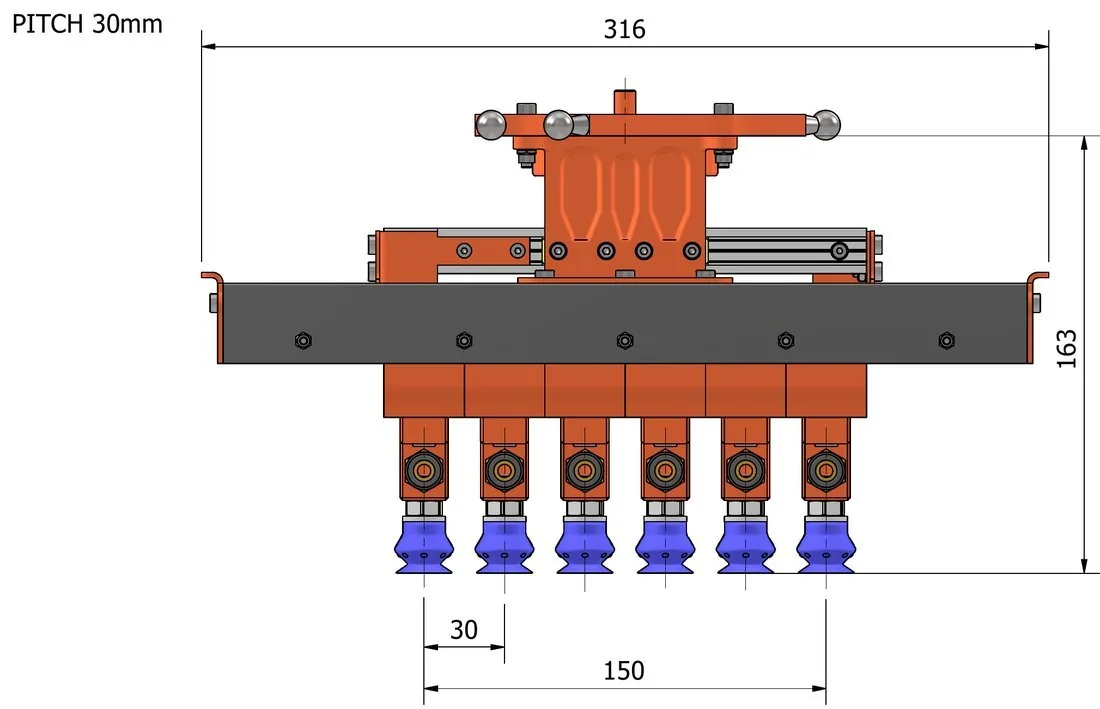
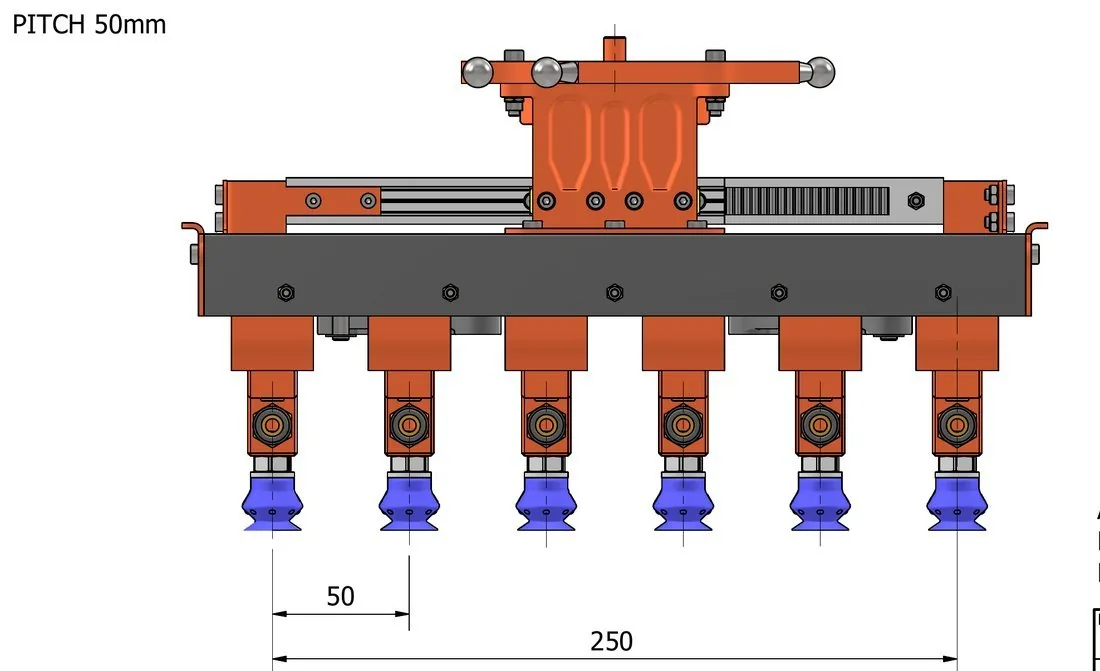
A carbon fibre and aluminium EOAT redesign that ended four replacements a year on a high speed delta robot picking cereal bars, and stopped the drops that were costing product on every cycle.
Every gram on the end of a delta robot's arm slows the cycle down - but this one had been stripped so far chasing that number that basic engineering principles went with it.

Our customer runs a high speed cereal bar line, picking product with a delta robot and packing it straight into boxes. Delta robots are built for speed, and that speed has a price: every gram on the end of the arm slows the cycle down and adds load to a robot that was never designed to carry much. The gripper already on the line had been designed around that one number almost to the exclusion of everything else, and basic engineering principles - the kind that keep a moving assembly rigid and repeatable - had been lost along the way. The result failed constantly: four EOAT replacements a year, and a cup design that kept dropping product on every shift.
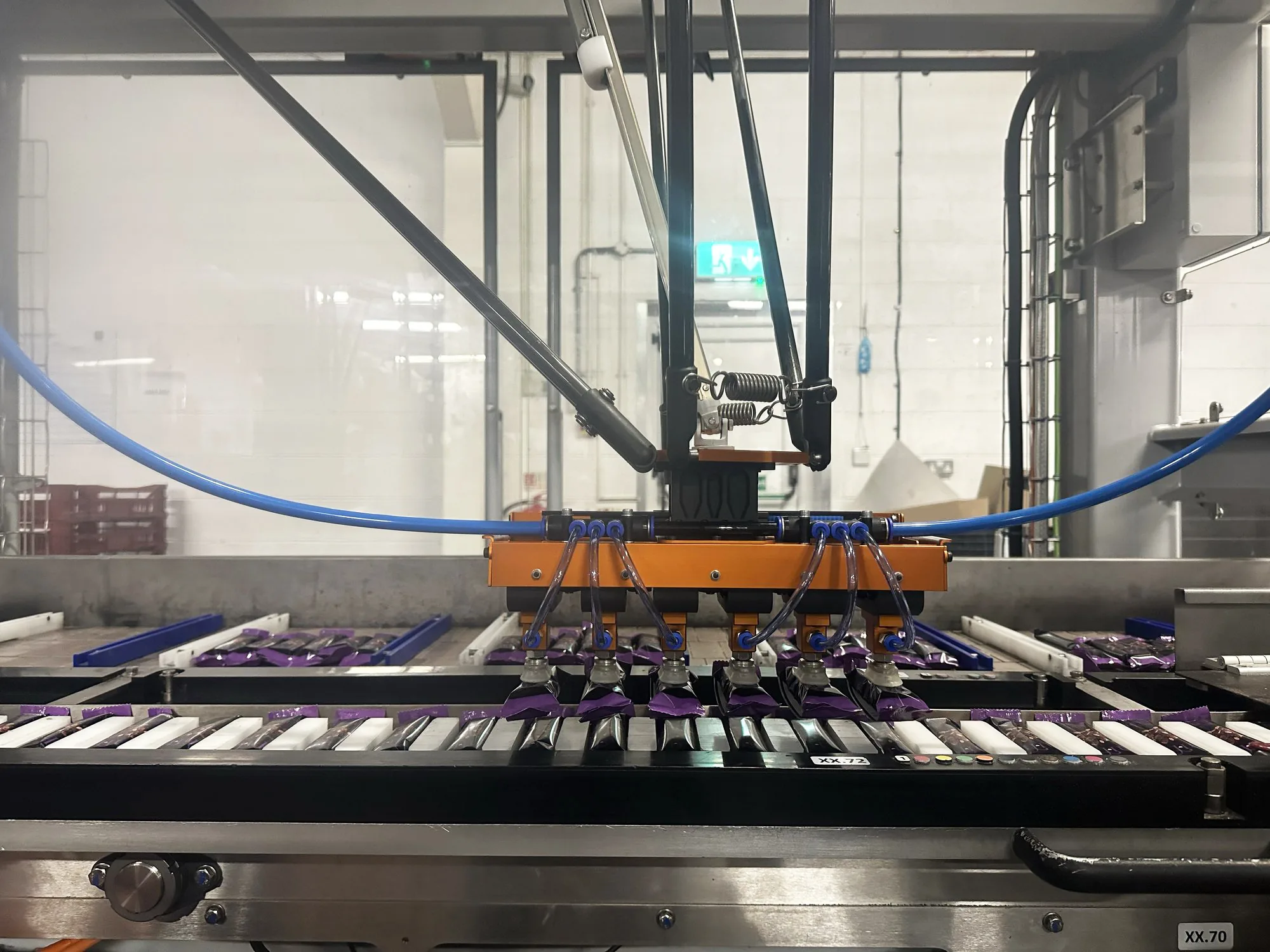
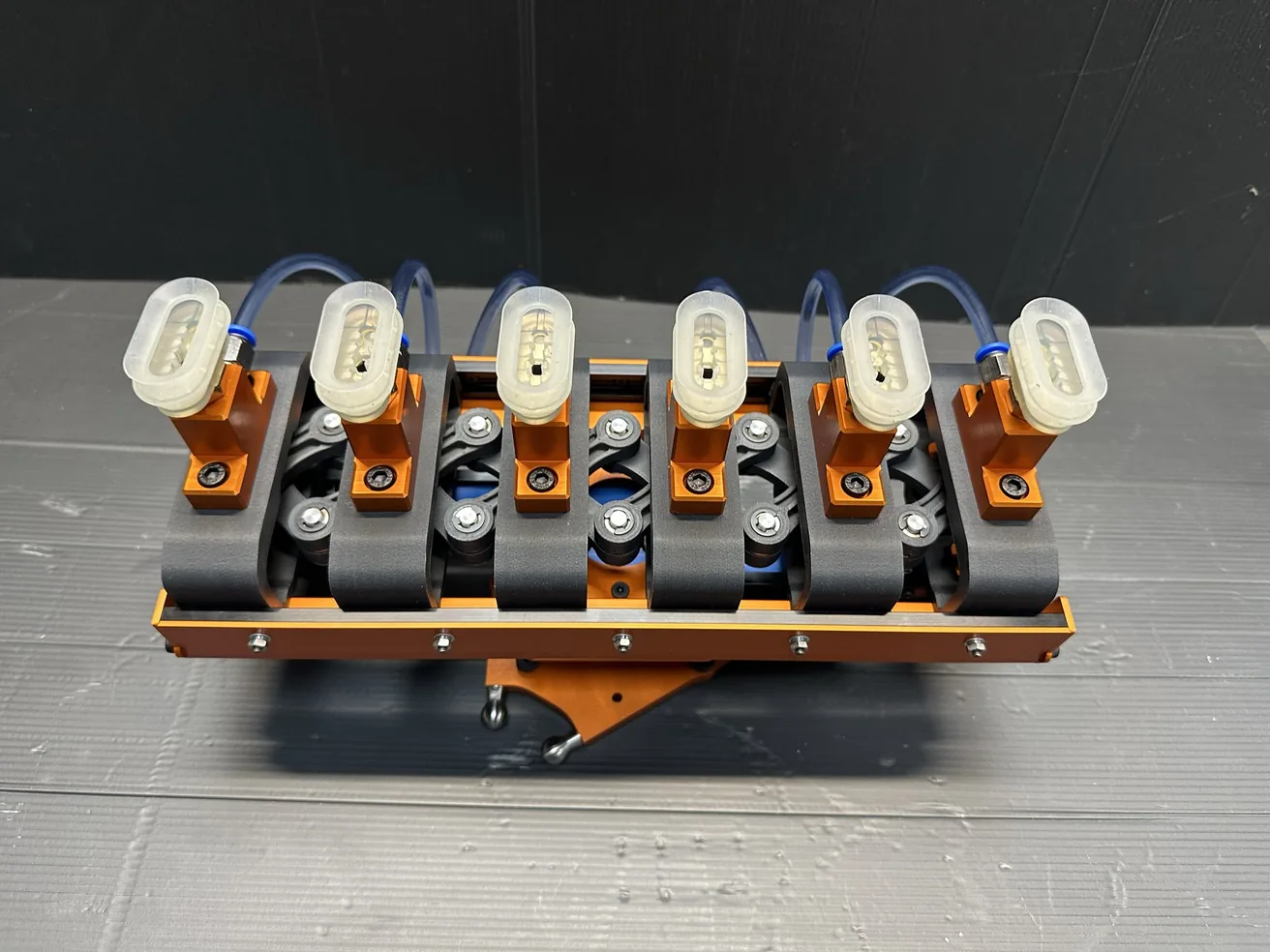
We took the whole EOAT back to first principles and manufactured it from carbon fibre and aluminium - materials that let us hit an aggressive weight target without hollowing out the structure to get there. Six pick stations run on a moving centres mechanism, closing the gap between pick points from a wider layout down to a tighter one between the pick and place position, so one tool adapts to two different product spacings instead of needing a separate gripper for each. We also redesigned the pick cup itself, specifying a profile matched to the actual geometry and weight of the bar it picks - it doesn't drop it.
Every part of this tool earns its place - the carbon fibre structure carries the loads a fast delta cycle puts through it without flexing, and the moving centres mechanism does the work of two grippers from one lightweight assembly.