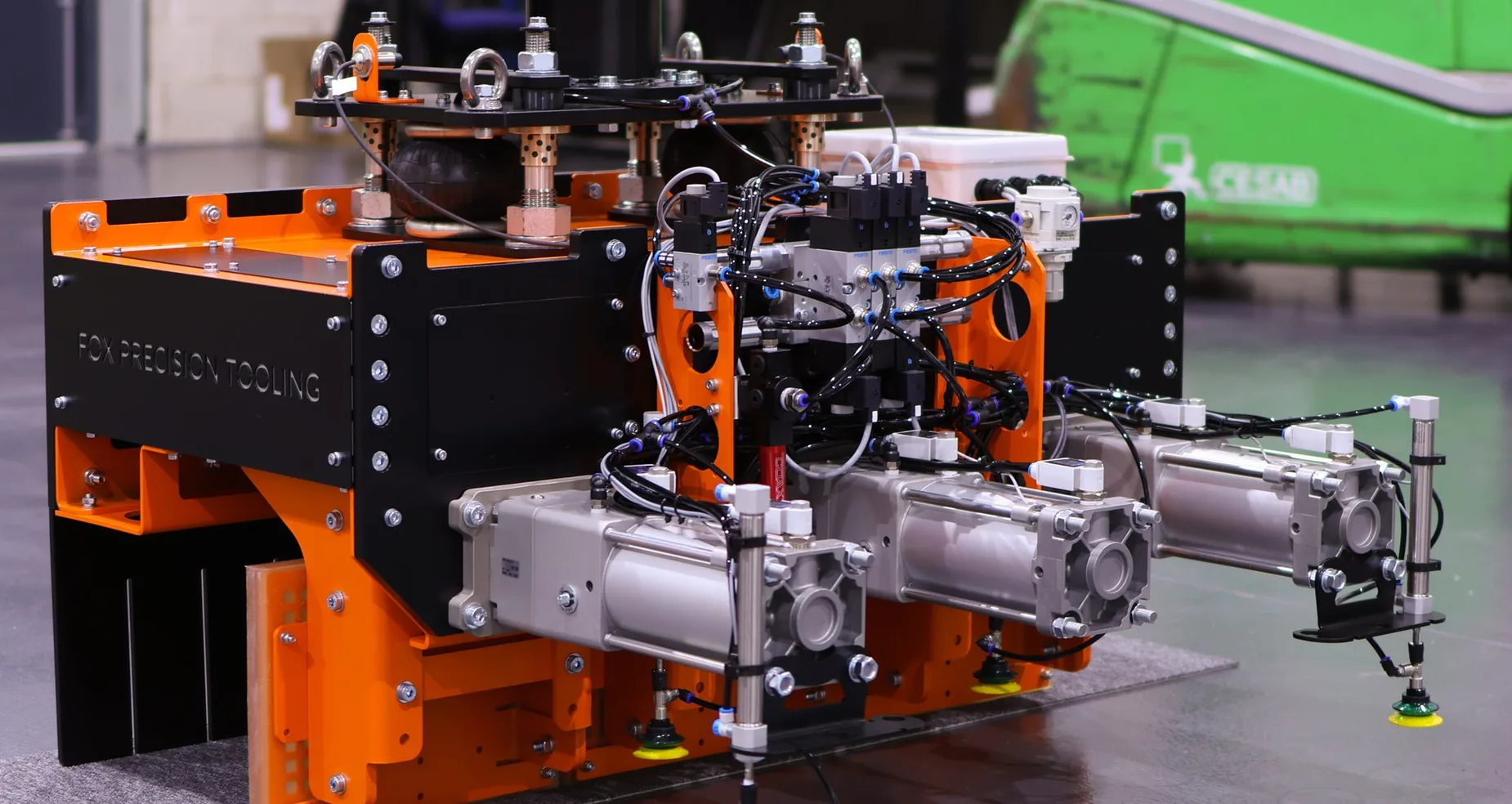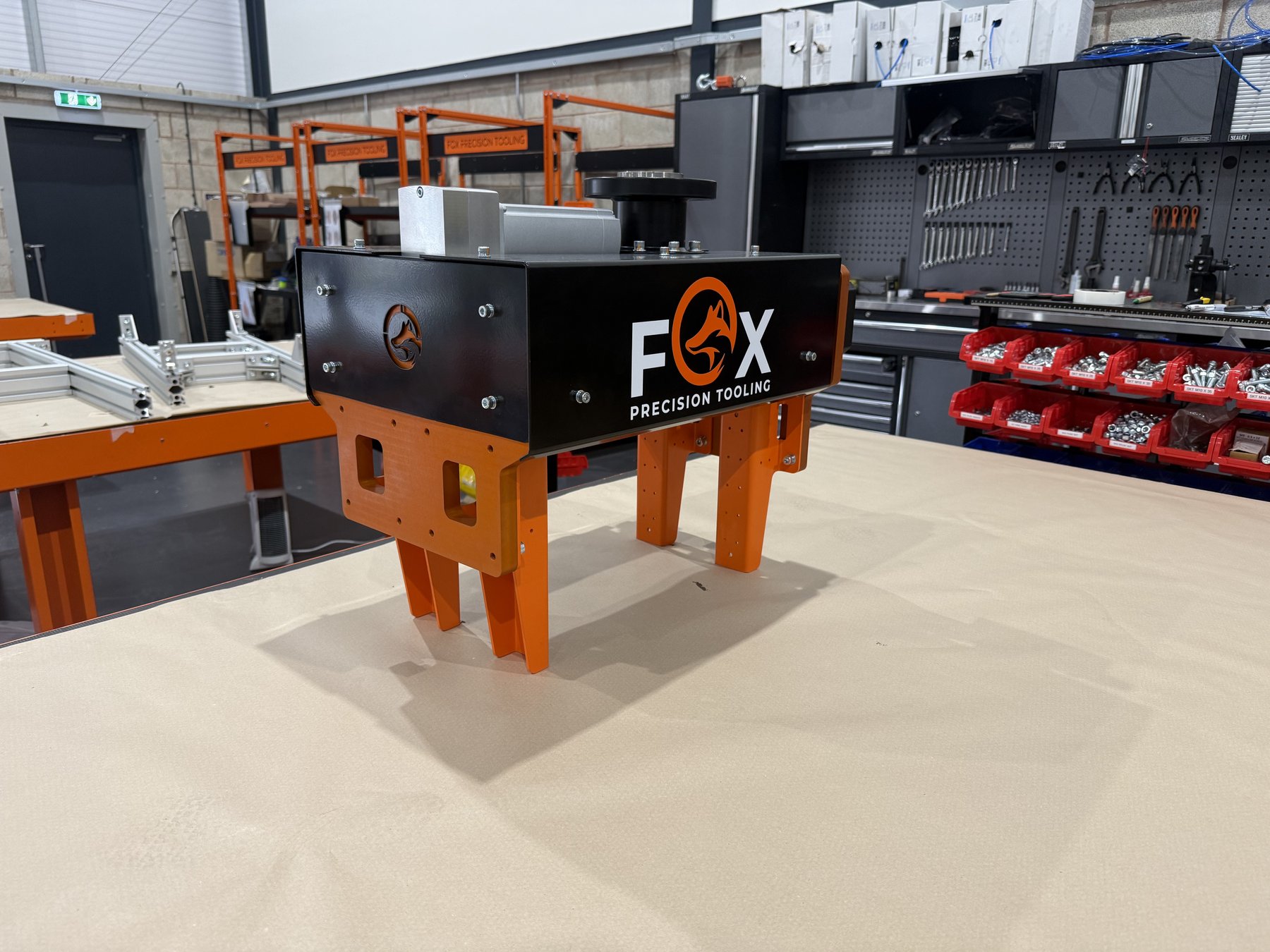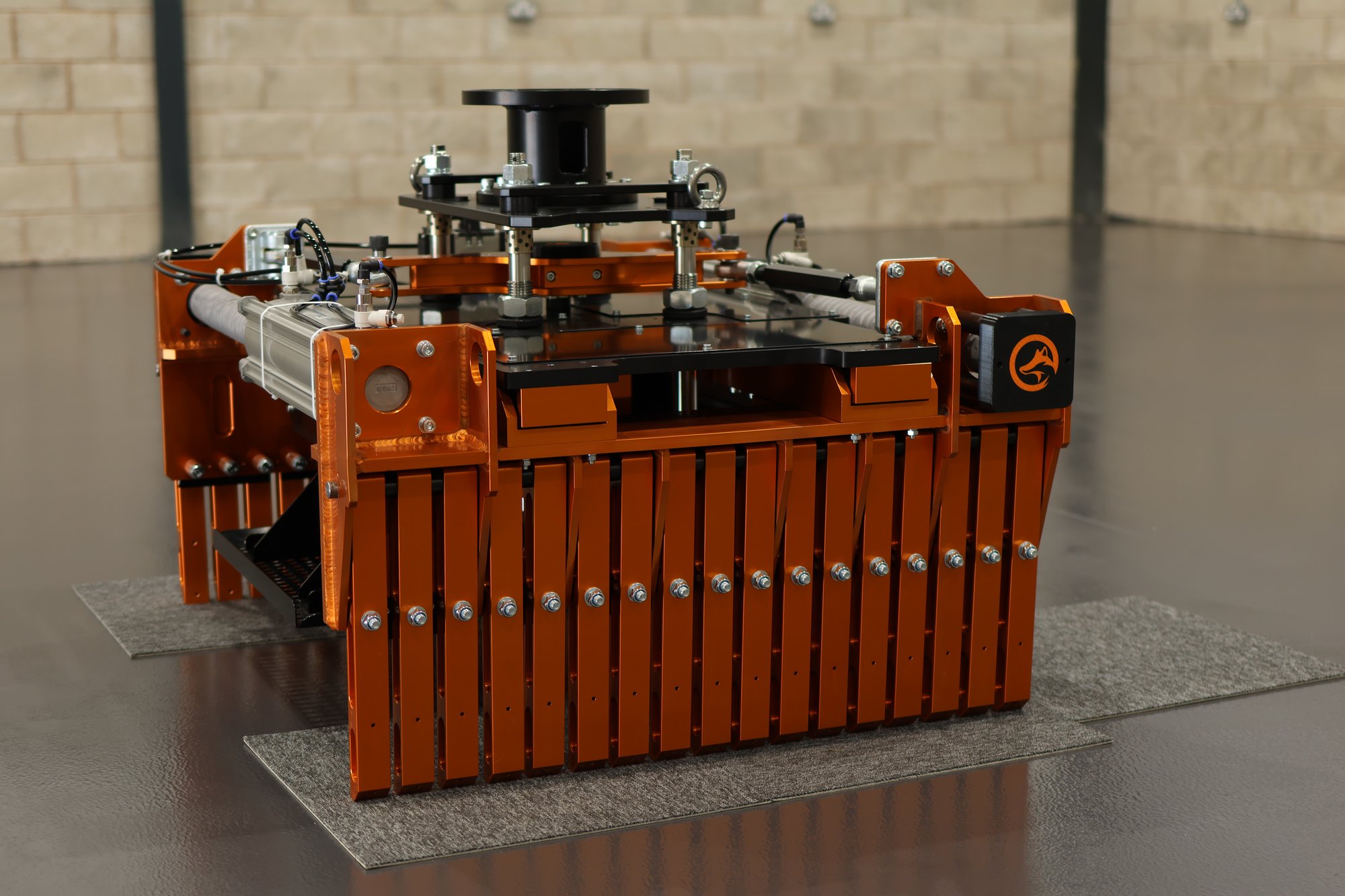
Engineered for harsh environments, built to keep production moving. Dust is everywhere, products are abrasive, heavy and rarely perfectly consistent, and the EOAT has to perform reliably, cycle after cycle, day after day.
Brick and tile manufacturing is one of the toughest environments for robotic automation. Products are abrasive, heavy and rarely perfectly consistent, dust is everywhere, and equipment has to run at high cycle rates for long periods with the EOAT performing reliably day after day.
We have extensive experience developing EOAT specifically for brick and tile production, with numerous systems designed and manufactured at our Derby facility - including equipment supplied to Wienerberger. Our experience covers everything from individual product handling through to multiple products, rows and complete patterns, using mechanical, pneumatic and servo-controlled solutions.
A brick isn't a precision-machined component. Neither is a roof tile. Edges differ, surfaces differ, products chip, dust accumulates, and the product presented to the robot isn't always exactly what the CAD model says it should be. That's why we don't start with a standard EOAT and try to make it fit the application - we design the EOAT around the real product, the process and the environment it has to survive in.
The objective is straightforward: build an EOAT that works in production - not just during a demonstration.
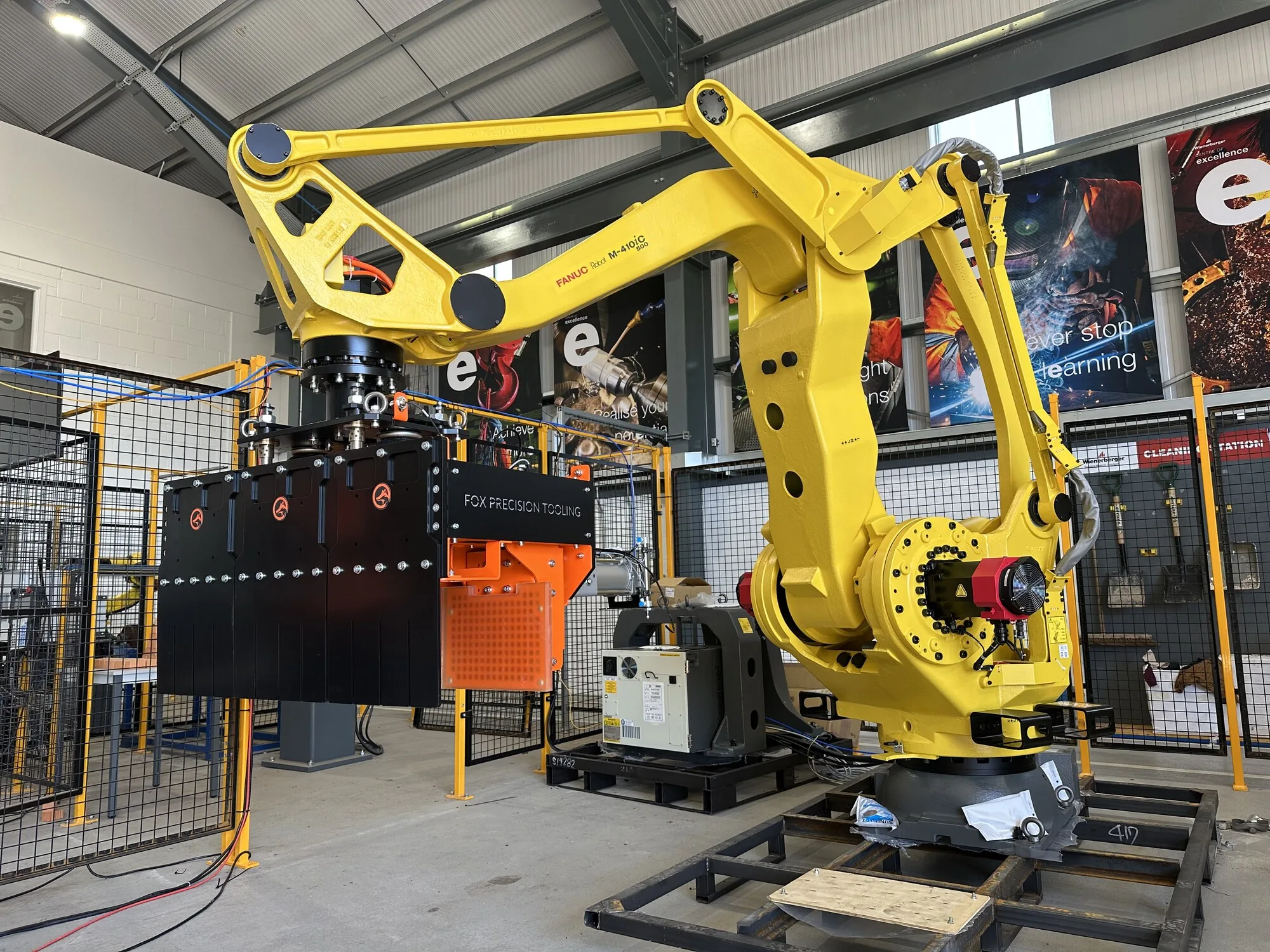
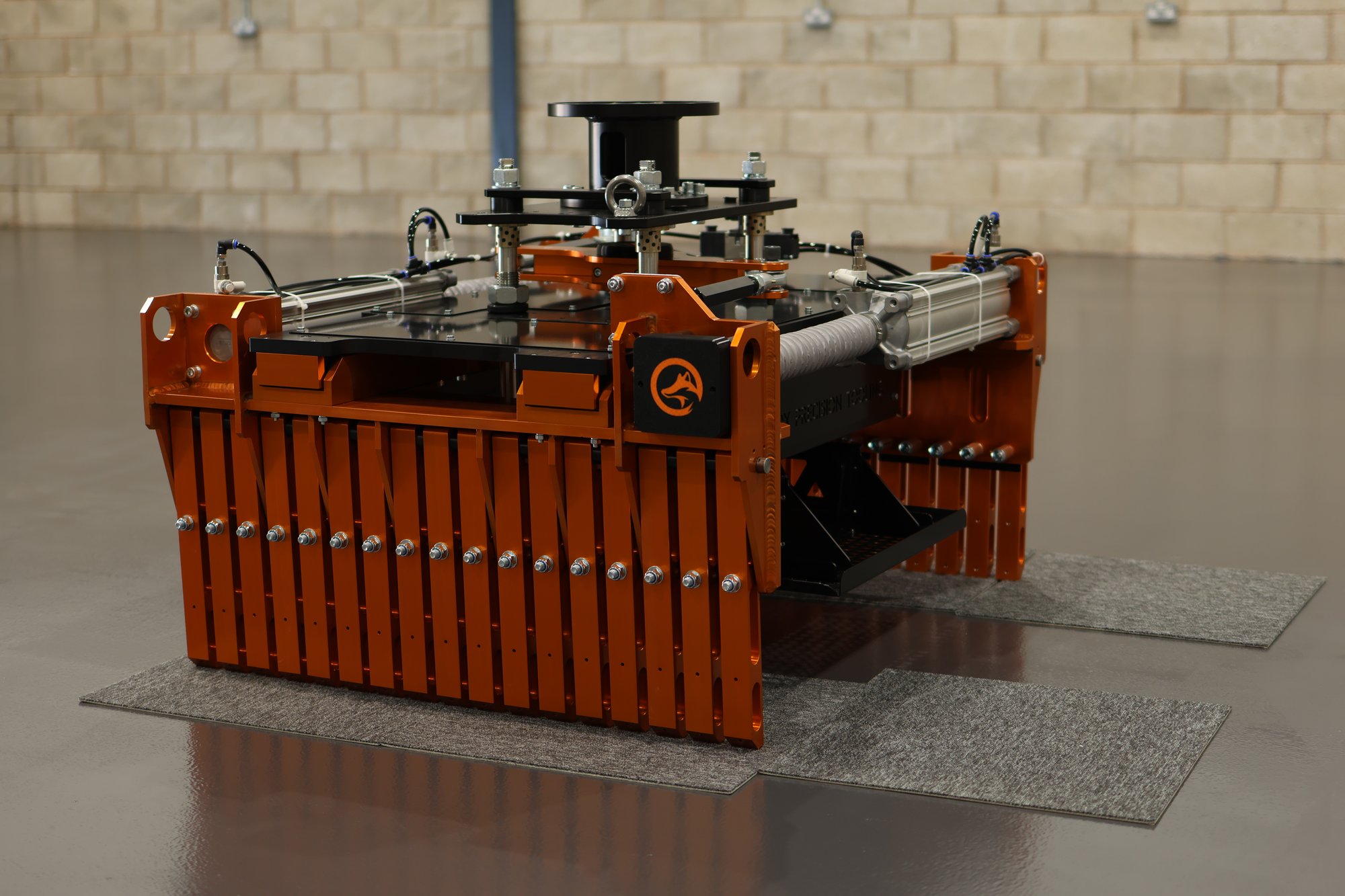
We don't add technology simply because we can. The application decides what's right - not the other way around.
A positive mechanical pick can be an extremely robust, repeatable way to handle products that are dusty, abrasive, porous or inconsistent. We look carefully at where and how the EOAT makes contact with the product, the gripping force required, product tolerances, robot acceleration and what happens when a brick or tile isn't positioned perfectly - gripping securely without unnecessarily marking, damaging or chipping it. Depending on the application, our EOAT can handle a single product, multiple products simultaneously, complete rows or more complex product patterns.
Where appropriate, we use pneumatic cylinders and actuators to operate mechanical fingers, clamps, supports and other picking functions - a simple, powerful and highly dependable solution for the right application. The difference is in how it's engineered: cylinder positions, guides, bearings, sensors, flow controls and pneumatic components all have to be considered against the environment they're operating in. In a clean factory, an exposed mechanism might never cause a problem. In a brick plant, it's a different story.
Different brick sizes, multiple product formats, changing patterns, adjustable spacing and automatic product changeovers are where servo-controlled EOAT gives us a real advantage. Servo axes let us control movement and position accurately - adjusting EOAT width, changing product spacing, moving individual sections or reconfiguring the EOAT between product recipes automatically. That can significantly increase the flexibility of a cell running multiple products on the same line. If mechanical works, we use mechanical. If pneumatic is right, we use pneumatic. If servo solves the problem, we use servo.

Wherever possible, we like to work with genuine production samples. For challenging applications, we'll get the actual bricks or tiles into our Derby facility and physically evaluate how they can be handled - dimensional variation, available contact points, surface condition, weight, stability and how the product behaves when picked.
Where required, we can develop and test the handling principle before committing to the final EOAT design. We'd rather discover a problem on our test bench than on your production line.

Dust gets into bearings, collects around slides, covers sensors and finds its way into moving mechanisms - exposing weaknesses that might never show up in a cleaner production environment. After enough cycles, small design problems become maintenance problems.
That's why protection from the environment isn't considered at the end of a project - it's part of the design from day one. We look at where dust is likely to travel and accumulate, what really needs to move, what can be simplified, and which components need additional protection, so sensors, bearings, cables, pneumatic lines, servo components and moving mechanisms are positioned and protected appropriately for the application.
We also think about accessibility. Even the best-designed EOAT operating in these environments will eventually need cleaning, adjustment and maintenance - if your maintenance team can't easily get to it, it hasn't been designed properly.
FOX has already designed and manufactured numerous EOAT systems for brick and tile production, including equipment supplied to Wienerberger. That experience means we're not learning about the challenges of this environment during your project - we already know what we're designing for.
Every project adds to that knowledge. And we bring that experience into the next one.

That's exactly when we want to get involved. Heavy products, awkward shapes, multiple sizes, dusty processes, short cycle times, large payloads, different product patterns, existing EOAT that isn't performing - give us the problem, and we'll look at the product, the process and the robot and work out how we'd approach it.
Sometimes the answer is a relatively straightforward mechanical EOAT. Sometimes pneumatic actuation is required. Sometimes servo control gives us the flexibility the application needs. And sometimes the best solution combines several technologies into one bespoke EOAT.
That's what bespoke should mean.
Designing and manufacturing the EOAT is only the beginning. Brick and tile production is demanding on equipment - dust, abrasive products and high cycle counts will eventually cause wear, even on equipment specifically designed for the environment. Rather than waiting for performance to deteriorate or a component to fail, our service and maintenance contracts carry out planned inspections and preventative maintenance to help keep the EOAT operating at optimum performance.
Small amounts of wear don't always stop an EOAT immediately - clearances increase, contact points wear, mechanisms move out of adjustment, sensors become contaminated. Individually minor, but left unchecked, these can eventually become downtime. We can also work with your maintenance team to establish service intervals and recommended critical spares, and support refurbishment, modification and upgrades when more extensive work is needed.
We don't just want to build your EOAT. We want to keep it running.
Our EOAT is designed, manufactured, assembled and tested by our team in Derby - so you have direct access to the people responsible for your equipment, from the first conversation through to years of production support.
Application Review → Concept → CAD Design → Product Trials → Manufacture → Assembly → Testing → Robot Trials → Installation Support → Servicing → Spares → Refurbishment
We can work directly with brick and tile manufacturers, alongside existing automation integrators, or with your preferred robot supplier - whether you're developing a new robot cell or need specialist EOAT for an existing one.
Fox Precision have consistently delivered high-quality precision-engineered components and end-of-arm tooling solutions. Their expertise, responsiveness, and attention to detail have been instrumental in supporting our projects and maintaining reliable, high-performing manufacturing operations. We value them as a trusted and professional engineering partner.
We've built dedicated expertise in brick, tile and ceramics handling - from green-state clay to fired product - alongside conveyor and material handling systems engineered for the same harsh conditions.