Ask most automation suppliers how a project starts, and they'll tell you about the robot - the brand, the reach, the payload. That's not where we start. We start with the part: what it is, how it needs to be handled, and what the EOAT has to do to move it without damaging it, dropping it, or slowing the line down.

It's an easy mistake to make, and most companies make it. They compare robot arms first: which one's fastest, which one's cheapest, which one's got the biggest brand name on the base. The end-of-arm tool - the part that actually touches the product - gets treated as an afterthought.
In practice, it's the opposite. The EOAT is what determines whether the finished cell actually works: whether parts get picked cleanly, placed accurately, and handled at the speed the line needs, cycle after cycle. Get the EOAT wrong and the most expensive robot in the world won't save the project. We design every cell around the part being processed and the EOAT it needs first - the robot gets chosen to suit that, not the other way around.
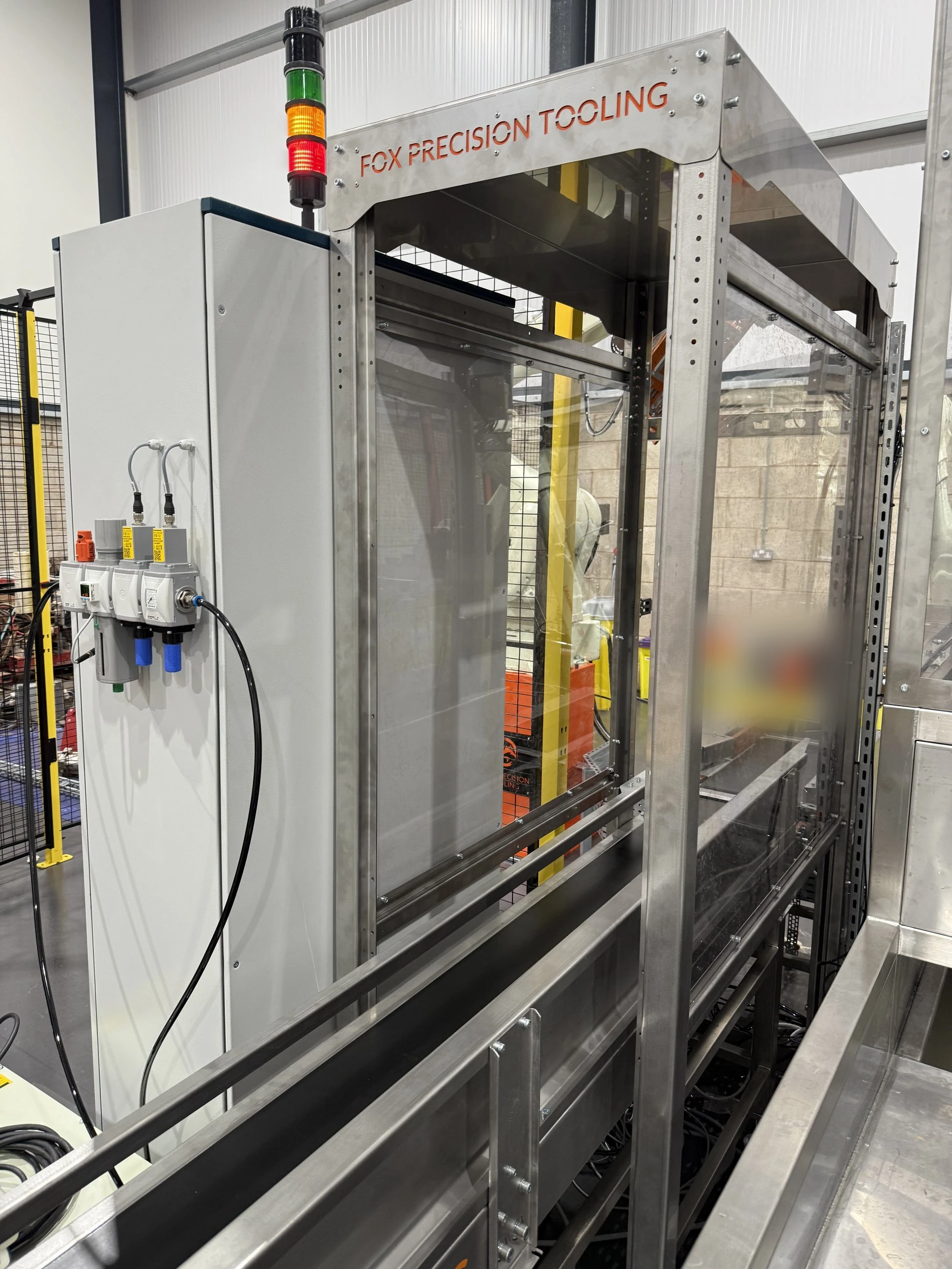
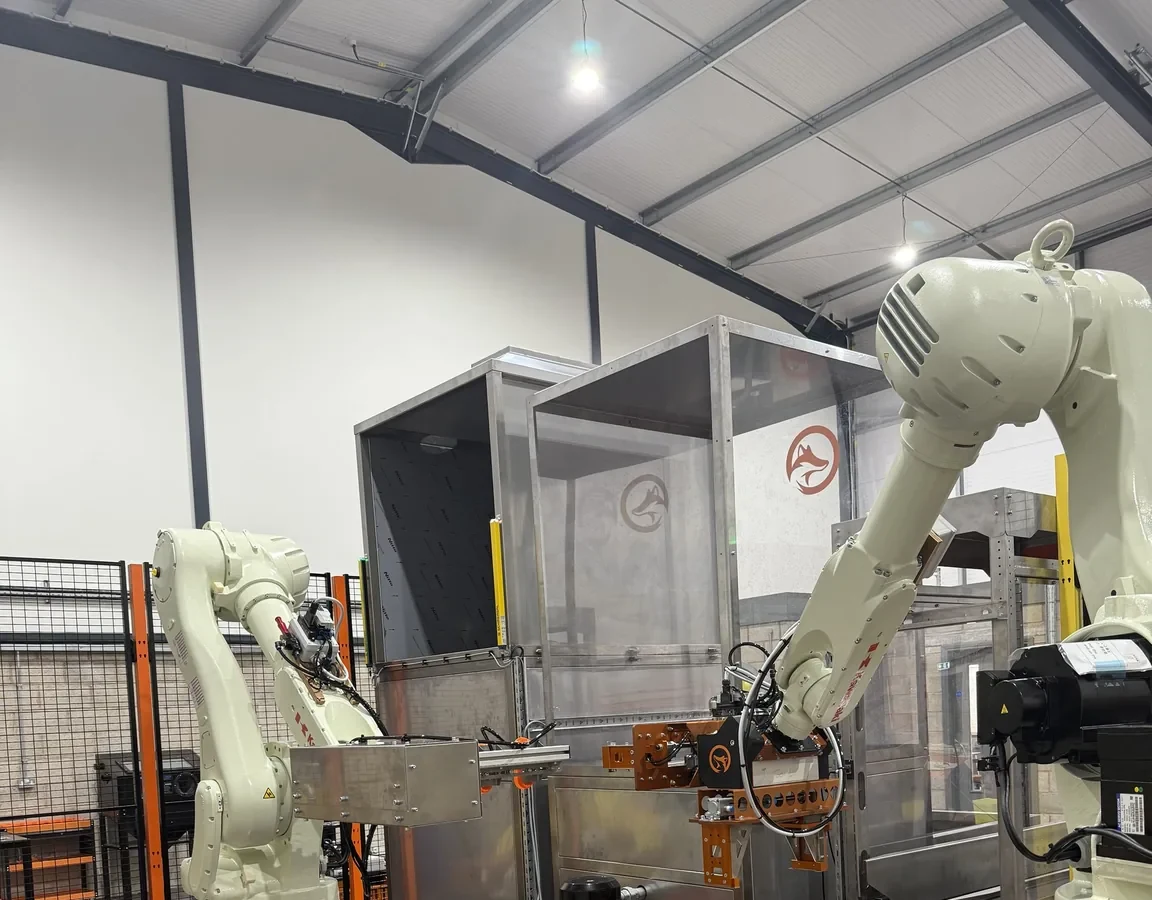
Every cell we build is designed and built in the UK. Once it's ready, it goes wherever it's needed. We deliver full turnkey systems across the UK and overseas, and we've got cells in operation in multiple countries right now.

Some jobs need more than one robot working the same space. We've got current projects out in the field running two robots working in unison - coordinated, synchronised, and doing it across a genuinely wide range of industries.
If your process needs multiple robots moving in step with each other, that's exactly the kind of complexity we build cells for. We work with a range of robot suppliers, not just one, so the robot chosen for your cell is the one that actually fits the application, not whichever brand happens to be on the shelf.
A close, three-stage process from first conversation through to a finished cell - click a stage below to see how it works.
Every detail about your product, your process, and your constraints - before design work starts. Nothing about the brief gets assumed; if a spec sheet or drawing leaves a question unanswered, we ask it now rather than guessing later.
We attend sites to look at the real-life scenario, not just drawings and data sheets. Seeing the actual line, the actual part, and the actual space it has to fit into catches the details a spec sheet alone never would.
We stay close to you throughout, so the product stays the priority, not just hitting a deadline. Bespoke EOAT, engineered for your application, built for the long run - and built around the part first, with the robot chosen to suit it, not the other way around.